Saturday, 28 February 2026

Trinity Houston Gardens Houston TX Sits in Houston’s Extreme Heat and Flood Triple Threat Zone Here Is How Our HVAC Contractor Prepares Your Home for Both

Introduction: 

Every Houston neighbourhood faces the city’s demanding climate. The summer heat. The humidity. The storm season brings flooding risks to communities across the metro area. But not every Houston neighbourhood faces all of those challenges simultaneously and with the intensity that Trinity and Houston Gardens residents experience year after year.

Trinity / Houston Gardens sits in a part of northeast Houston that researchers and resilience planners have specifically identified as one of the city’s most climate-exposed communities, a neighbourhood where extreme heat, serious flood risk, and compromised air quality converge in ways that create genuine, compounding challenges for the people who live here. The 54 percent of homes that flooded during Harvey were not just statistics. They were families in this specific community dealing with the worst that Houston’s climate delivers all at once.

For homeowners in Trinity and Houston Gardens that climate reality has direct implications for every system in their home and none more so than the HVAC system that is responsible for keeping the indoor environment safe, comfortable, and healthy through all of it. As an HVAC Contractor serving Trinity / Houston Gardens, Houston, TX our team at 75 Degree AC has built our service approach for this neighbourhood around the specific triple threat its residents face. This post explains exactly what that means in practice and what we do differently here because of it.

Understanding the Triple Threat: What Trinity Houston Gardens Actually Faces
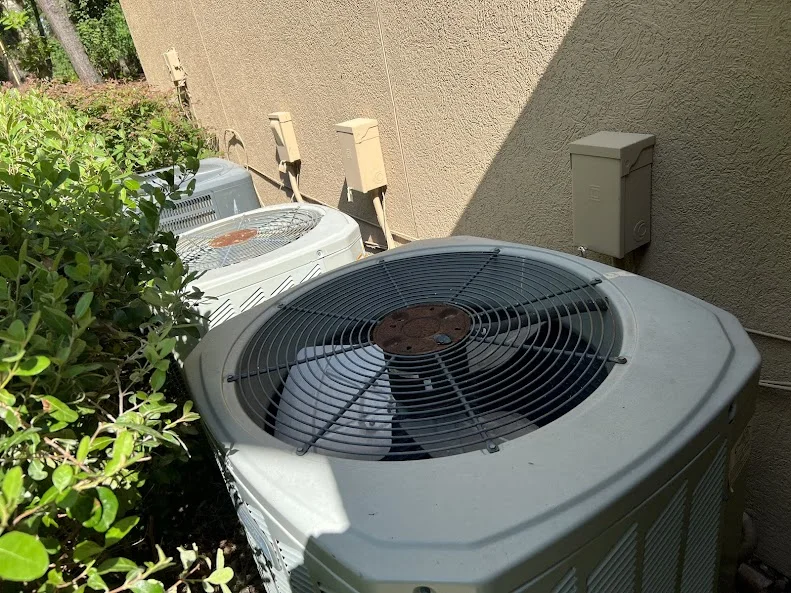
Trusted commercial HVAC services in Meyerland

Before we get into specific HVAC recommendations it is worth being direct about what the triple threat designation actually means for Trinity and Houston Gardens residents because understanding the problem is the foundation of understanding the solution.

Extreme Heat That Exceeds Houston’s Already Demanding Average

Trinity / Houston Gardens sits in a part of Houston where the urban heat island effect is particularly pronounced. The neighbourhood’s older housing stock, significant impervious surface area, limited tree canopy in many sections, and industrial activity in the surrounding east Houston corridor all contribute to ambient temperatures that regularly exceed Houston’s already high baseline during summer months.

For residential HVAC systems this elevated ambient temperature environment is genuinely demanding. Air conditioners are rated for efficiency and cooling capacity at standard outdoor temperature conditions. When outdoor temperatures consistently exceed those standard conditions as they do regularly in Trinity and Houston Gardens during Houston’s peak summer weeks systems work harder, run longer, consume more electricity, and experience accelerated component wear compared to what their specifications would predict in a standard operating environment.

An HVAC system that is adequately sized for a Houston home in a cooler neighbourhood may be genuinely undersized for the same square footage in Trinity and Houston Gardens simply because of the elevated ambient temperature conditions it operates in. Our team factors this into every sizing recommendation and replacement assessment we perform in this neighbourhood.

Flooding That Damages HVAC Systems in Ways That Take Years to Fully Manifest

Harvey’s impact on Trinity and Houston Gardens was devastating and well documented. But the HVAC story of post-Harvey Trinity and Houston Gardens is not just about the homes that were visibly destroyed and fully rebuilt. It is about the homes that were repaired sometimes quickly and under enormous financial and emotional pressure where the HVAC damage was addressed at the surface level without the thorough component assessment and remediation that flood-exposed systems actually require.

Flood water that reached air handlers, ductwork, and electrical components in Trinity and Houston Gardens homes during Harvey left behind contamination, corrosion acceleration, and moisture infiltration that does not always manifest as immediate system failure. Instead it shows up as premature component failures in the years following the flood event capacitors corroding from the inside, control board connections developing intermittent faults from moisture-induced oxidation, duct lining harbouring biological growth that established itself in contaminated flood water and was never fully eliminated.

Our HVAC contractor performs post-flood HVAC assessments that go significantly deeper than checking whether the system turns on. We look at the corrosion state of electrical connections, the biological contamination status of duct systems, the integrity of refrigerant circuits that may have been compromised by flood water infiltration, and the overall condition of components that flood water contact accelerates the degradation of even when that degradation is not yet visible as an obvious failure.

Air Quality Challenges That Your HVAC System Is the First Line of Defence Against

Trinity and Houston Gardens’ position in Houston’s northeast industrial corridor means the neighbourhood’s outdoor air carries pollutant loads that are meaningfully higher than in residential areas further from industrial activity. The Ship Channel, nearby refinery and petrochemical operations, and heavy freight corridor traffic all contribute to outdoor particulate levels, volatile organic compound concentrations, and industrial emission exposure that directly affect the air quality inside Trinity and Houston Gardens homes.

For residents with respiratory conditions, children, elderly family members, or anyone whose health is already affected by the neighbourhood’s environmental challenges, the HVAC system is not just a comfort appliance. It is the primary barrier between the outdoor air quality conditions and the indoor environment where the family spends most of its time. An HVAC system with inadequate filtration, contaminated ductwork, or compromised air handling performance in Trinity and Houston Gardens is not just an inconvenience. It is a genuine health infrastructure failure.

How Our HVAC Contractor Addresses the Heat Threat in Trinity Houston Gardens

System Sizing That Accounts for Elevated Ambient Conditions

Standard HVAC system sizing calculations use design temperature assumptions that may underestimate the actual peak conditions Trinity and Houston Gardens homes experience during Houston’s most extreme summer weeks. Our team performs load calculations for this neighbourhood that specifically account for the elevated ambient temperature conditions of the urban heat island environment ensuring replacement systems are sized for the actual conditions your home faces rather than the average conditions a standard calculation assumes.

An undersized system in Trinity and Houston Gardens does not just fail to keep the home comfortable during peak heat. It runs continuously without ever satisfying the thermostat consuming electricity constantly, accumulating wear on every component simultaneously, and typically failing at the worst possible moment when the outdoor temperature is highest and the system has been running without adequate recovery time for days.

Equipment Selection Rated for High Ambient Operating Conditions

Not all HVAC equipment performs equally at elevated outdoor temperatures. Some systems show significant efficiency and capacity degradation when outdoor temperatures push above 95°F exactly the conditions Trinity and Houston Gardens experience regularly. Our team specifically evaluates equipment performance ratings at high ambient temperatures when recommending systems for this neighbourhood prioritising equipment that maintains its cooling capacity and efficiency at the elevated temperatures this community actually faces rather than only at the standard rating conditions manufacturers typically emphasise.

Shade and Airflow Assessment for Outdoor Units

Condenser units in Trinity and Houston Gardens that are exposed to direct afternoon sun without adequate shade operate at a meaningful efficiency disadvantage compared to units with good solar shading. Our assessments for this neighbourhood specifically evaluate condenser placement and shade conditions and include recommendations for improving the thermal environment around outdoor units where practical because in a neighbourhood with Trinity and Houston Gardens’ ambient temperature conditions every degree of improvement in the condenser’s operating environment translates directly into efficiency and longevity.

How Our HVAC Contractor Addresses the Flood Threat in Trinity Houston Gardens

Pre-Flood Season System Assessment and Preparation

The most effective flood preparation for Trinity and Houston Gardens HVAC systems happens before the flooding arrives, not after. Our team recommends a pre-storm-season assessment each spring that specifically evaluates the flood vulnerability of each system component and implements practical protective measures where possible.

This assessment covers the elevation of electrical disconnects and control components relative to the property’s historical flood water levels, the condition of outdoor unit mounting that affects whether a unit can be temporarily elevated if flood warning is received, the sealing condition of ductwork entry points that represent flood water infiltration pathways into the system, and the overall condition of components that flood water exposure would most severely damage allowing us to prioritise any necessary pre-season repairs before a storm event makes them more urgent and more expensive.

Post-Flood Assessment Protocol That Goes Beyond the Surface

When Trinity and Houston Gardens homes experience flooding our team’s post-flood HVAC assessment covers a significantly more thorough checklist than simply verifying the system operates. We assess every electrical connection point for corrosion and moisture infiltration damage. We evaluate ductwork for biological contamination using the category of flood water which in Trinity and Houston Gardens typically involves bayou overflow carrying sewage and industrial contaminants as a key factor in the remediation recommendation. We check refrigerant circuit integrity for signs of moisture infiltration. And we document all findings in writing specifically to support insurance claim processes that Trinity and Houston Gardens homeowners navigate after major flood events.

Ductwork Remediation After Flood Exposure

Ductwork contaminated by the category three flood water that Trinity and Houston Gardens experiences during major events is one of the most important post-flood HVAC decisions homeowners in this community face. Contaminated duct lining that is sealed over and returned to service distributes whatever biological growth has established itself throughout every room in the home every time the system runs. Our team is direct with Trinity and Houston Gardens homeowners about when ductwork remediation through cleaning is adequate and when contamination levels require replacement because this decision has genuine long-term health implications for every person in the household.

Is your Trinity Houston Gardens Houston TX home’s HVAC system prepared for both the extreme heat and flood conditions this neighbourhood faces? Call 75 Degree AC at (713) 598-2737 today for a comprehensive assessment that addresses both threats. Free estimates on system replacement and our $85 diagnostic fee waived with completed repairs.

How Our HVAC Contractor Addresses the Air Quality Threat in Trinity Houston Gardens

Filtration Upgrades That Go Beyond Standard Residential Levels

Standard residential HVAC filtration, the fibreglass or basic pleated filters that most Houston homes use was designed for typical residential air quality conditions. Trinity and Houston Gardens’ industrial corridor air quality is not typical residential air quality. The particulate types, concentrations, and chemical composition of outdoor air in this neighbourhood require filtration that goes meaningfully beyond what standard filters provide.

Our team assesses filtration options for Trinity and Houston Gardens homes on a spectrum from high-efficiency MERV-rated pleated filters that capture finer industrial particulate to HEPA filtration systems and UV light purification installations that address biological contaminants and volatile organic compounds that standard filters cannot capture.

We match filtration recommendations to the specific household situation a family with young children or members with respiratory conditions in Trinity and Houston Gardens has different filtration priorities than a single occupant household and we prioritise recommendations based on the actual air quality risk factors the household faces rather than applying a one-size-fits-all upgrade recommendation.

Duct Integrity as an Air Quality Issue

Duct leakage in Trinity and Houston Gardens homes is not just an energy efficiency issue it is an air quality issue. Leaking ducts that draw air from attic spaces or wall cavities pull whatever is in those unconditioned spaces directly into the living environment. In a neighbourhood with Trinity and Houston Gardens’ outdoor air quality conditions the air infiltrating through duct leaks carries the full particulate and chemical load of the local outdoor environment bypassing whatever filtration the system has in place entirely.

Our duct integrity assessment for Trinity and Houston Gardens homes specifically evaluates duct leakage as an air quality risk in addition to the efficiency impact it represents. Sealing significant duct leakage in this neighbourhood delivers an air quality benefit that goes well beyond what the efficiency improvement alone would suggest particularly for households with respiratory health concerns.

Indoor Air Quality Testing for Homes in the Industrial Corridor

For Trinity and Houston Gardens homeowners with specific health concerns about indoor air quality our team recommends professional indoor air quality testing before and after HVAC system modifications as a way of objectively measuring the impact of filtration and ductwork improvements on the actual indoor air environment. This testing provides concrete data rather than assumptions about what the air inside the home actually contains and it gives homeowners in this neighbourhood the information they need to make genuinely informed decisions about their air quality investment priorities.

Putting It All Together: A Triple Threat HVAC Strategy for Trinity Houston Gardens

The HVAC approach that serves Trinity and Houston Gardens homeowners best is not a standard residential maintenance program with a few minor adjustments. It is a genuinely integrated strategy that accounts for all three climate threats this neighbourhood faces: extreme heat, serious flood risk, and challenging air quality as interconnected realities that all affect the performance, longevity, and health impact of the home’s HVAC system.

That integrated strategy includes proper system sizing and equipment selection for elevated ambient conditions, pre-season flood preparation and post-flood thorough assessment protocols, filtration and air quality systems scaled to the neighbourhood’s actual outdoor air quality conditions, duct integrity that serves both efficiency and air quality goals, and an annual maintenance schedule calibrated to the accelerated wear patterns that Trinity and Houston Gardens’ climate conditions produce.

This is the approach our team brings to every home we serve in this neighbourhood. Not because it is what the manual says to do in a generic Houston residential situation but because it is what the specific realities of Trinity and Houston Gardens actually require to protect the people who live here.

Our team at 75 Degree AC is ready to build the right HVAC strategy for your Trinity Houston Gardens Houston TX home one that takes every climate threat your neighbourhood faces seriously. Call us at (713) 598-2737 or visit 75degreeac.com. Your trusted HVAC Contractor in Trinity / Houston Gardens, Houston, TX is here to help.

Conclusion: Trinity Houston Gardens Deserves an HVAC Contractor Who Takes Its Climate Reality Seriously

The residents of Trinity and Houston Gardens are not dealing with a mild version of Houston’s climate challenges. They are dealing with the most demanding combination of heat, flood risk, and air quality conditions that Houston delivers in a community that has already shown extraordinary resilience in the face of those challenges.

The HVAC systems in these homes are not optional comfort appliances. They are essential health and safety infrastructure for families navigating a genuinely difficult climate environment. They deserve the same thoughtful, thorough, and neighbourhood-specific approach that every other aspect of resilient homeownership in Trinity and Houston Gardens requires.

At 75 Degree AC our commitment to Trinity and Houston Gardens is built on that understanding. We know this neighbourhood’s climate reality. We know what extreme heat does to HVAC systems operating in the urban heat island conditions here. We know what Harvey-era flood damage still looks like in systems that were repaired but not fully remediated. And we know what the industrial corridor air quality means for filtration and indoor air quality decisions in these homes.

That knowledge is what we bring to every call we take from a Trinity or Houston Gardens homeowner. It is what makes our recommendations genuinely right for this community, not just technically correct in the abstract.

Frequently Asked Questions

1. How does the urban heat island effect in Trinity Houston Gardens Houston TX specifically affect HVAC system sizing recommendations?

The urban heat island effect in Trinity and Houston Gardens elevates ambient outdoor temperatures during peak summer conditions beyond the design temperature assumptions used in standard HVAC sizing calculations. Our team uses actual observed peak temperature data for this neighbourhood rather than Houston-wide averages when performing Manual J load calculations for Trinity and Houston Gardens homes. 

2. Our Trinity Houston Gardens Houston TX home was repaired after Harvey. How do we know if the HVAC system was properly remediated?

Post-Harvey HVAC remediation quality in Trinity and Houston Gardens varies enormously depending on who performed the work, under what time pressure, and with what level of resources. The most reliable way to assess current system condition is a comprehensive diagnostic that specifically evaluates flood damage indicators, corrosion state of electrical connections and components, biological contamination status of ductwork, refrigerant circuit integrity, and control board condition. 

3. What filtration level does our HVAC contractor recommend for Trinity Houston Gardens Houston TX homes near industrial operations?

Our baseline recommendation for Trinity and Houston Gardens homes is a minimum MERV 11 pleated filter which captures significantly finer particulate than standard fibreglass or basic pleated filters while remaining compatible with most residential HVAC systems. For households with members who have respiratory conditions, allergies, or other health sensitivities we discuss MERV 13 filtration, HEPA bypass systems, and UV light purification as additional layers of protection against the specific pollutant types present in Trinity and Houston Gardens’ industrial corridor air. 

4. How should Trinity Houston Gardens Houston TX homeowners prepare their HVAC system before hurricane and storm season each year?

Our pre-storm-season preparation for Trinity and Houston Gardens homes covers elevation assessment of vulnerable components, outdoor unit mounting condition that affects temporary elevation options if flood warning is received, ductwork entry point sealing to reduce flood water infiltration pathways, electrical disconnect condition and weatherproofing, and overall system component condition that determines flood vulnerability priority. 

5. Does 75 Degree AC provide written documentation for insurance purposes after flood damage to HVAC systems in Trinity Houston Gardens Houston TX?

Yes. Our post-flood assessments for Trinity and Houston Gardens homes include complete written documentation of all findings component by component condition assessment, flood water exposure evaluation, contamination findings, and replacement recommendations with clear justification for each item.


from 75Degree AC https://ift.tt/Vl9YQJU
via IFTTT

Friday, 27 February 2026

When to Check Your HVAC System’s Thermostat Calibration in Montrose

Have you ever noticed your home feels warmer or cooler than what your thermostat displays? This frustrating discrepancy often stems from calibration drift, a common issue that affects temperature accuracy over time. Your thermostat serves as the brain of your climate control system, telling it when to activate and when to rest based on temperature readings. When those readings become inaccurate, your entire system operates on faulty information, leading to discomfort and wasted energy. Montrose residents face unique challenges with Houston’s extreme heat and humidity fluctuations that can accelerate calibration issues. Professional HVAC Services in Montrose, Houston, TX include calibration checks as part of comprehensive system maintenance, yet many homeowners don’t realize how significantly this small component affects overall performance. Companies like 75 Degree AC emphasize regular calibration verification as essential preventive care rather than waiting until problems become obvious.

The relationship between accurate temperature sensing and system efficiency goes deeper than most people realize. Even a few degrees of calibration error triggers cascading effects throughout your home’s climate control. 75 Degree AC frequently encounters situations where homeowners have been battling comfort issues for months, adjusting settings repeatedly, only to discover the root cause was simple thermostat miscalibration. Understanding when and why to check calibration helps you maintain optimal comfort while avoiding unnecessary energy consumption. Think of calibration like keeping your car’s speedometer accurate; you need reliable information to make good decisions about operation.

Understanding Thermostat Calibration Basics

Thermostat calibration refers to the accuracy with which your device measures actual room temperature compared to what it displays. A properly calibrated thermostat shows readings within one degree of actual temperature, ensuring your HVAC Systems receive correct information for decision-making. Over time, various factors cause sensors to drift from their original accuracy. Temperature sensors contain components that respond to heat, and these components can degrade or shift slightly through normal use, exposure to dust, electrical fluctuations, or simple aging. The drift happens gradually, often going unnoticed until the discrepancy becomes significant enough to affect comfort or trigger noticeably odd system behavior.

How Thermostats Measure Temperature

Modern thermostats use different sensing technologies depending on their design and age. Mechanical thermostats rely on bimetallic strips that expand and contract with temperature changes, physically moving contacts that control your system. Digital models use electronic sensors called thermistors, which change electrical resistance based on temperature. Smart thermostats employ even more sophisticated sensors with additional capabilities for humidity detection and multiple zone monitoring. Regardless of technology type, all sensors can develop inaccuracies. Mechanical systems face issues with physical wear, while electronic sensors may drift due to component aging or environmental exposure. Understanding your thermostat type helps determine appropriate calibration check intervals and methods.

Signs Your Thermostat Needs Calibration

HVAC maintenance improving air quality and cooling in Harrisburg / Manchester Houston home

Several telltale indicators suggest your thermostat may need calibration attention. The most obvious sign is temperature disagreement between what your thermostat displays and what you actually feel in your home. If you set the temperature to 72 degrees but your space feels noticeably warmer or cooler, calibration likely needs checking. Another red flag appears when different thermometers placed near your thermostat show significantly different readings. Professional HVAC Contractors Montrose, TX recommend comparing thermostat readings with a reliable standalone thermometer placed nearby but away from direct airflow. Differences exceeding two degrees warrant investigation.

Temperature Discrepancies Between Rooms

While some temperature variation between rooms is normal due to factors like sun exposure and airflow patterns, excessive differences often indicate thermostat placement or calibration problems. If your thermostat location experiences conditions unrepresentative of your overall home, it sends your system misleading information. A thermostat in a consistently cool hallway might underestimate how warm your living spaces actually are, preventing adequate cooling. Conversely, a device near a heat source reads artificially high, causing excessive cooling that leaves other areas uncomfortable. These issues sometimes stem from poor initial placement rather than calibration drift, but the effect on comfort remains the same. 75 Degree AC evaluates both calibration accuracy and thermostat location during comprehensive assessments.

Frequent System Cycling

Short cycling, where your system turns on and off repeatedly in quick succession, often indicates calibration problems. When a thermostat reads inaccurately, it may signal your system to shut off prematurely, only to restart moments later when the flawed sensor detects the temperature hasn’t actually reached the setpoint. This constant cycling wastes tremendous energy, increases wear on equipment, and fails to properly dehumidify your space during Air Conditioning Services operation. The reverse problem causes excessively long run times, with systems operating continuously because the thermostat never registers that target temperature has been achieved. Both scenarios suggest calibration verification should happen soon, potentially during your next HVAC Repair Montrose, TX service call.

Seasonal Timing for Calibration Checks

Strategic timing of calibration checks helps ensure your system performs optimally when you need it most. Rather than waiting for problems to emerge, proactive seasonal verification catches drift before it significantly impacts comfort or efficiency. Most experts recommend calibration checks at least annually, ideally coordinated with other preventive maintenance tasks. However, Houston’s demanding climate and extended cooling season justify more frequent verification for many Montrose residents.

Pre-Summer Preparation

Late spring represents the ideal time for calibration verification before Houston’s brutal summer heat arrives. Your cooling system will soon face months of near-constant operation, making accurate temperature sensing crucial for both comfort and efficiency. A comprehensive pre-summer HVAC Inspection should always include thermostat calibration verification alongside filter changes, refrigerant level checks, and electrical connection testing. Addressing calibration issues before summer’s peak demand prevents situations where you discover problems during a heat wave when service demand is highest and your discomfort most acute. This proactive approach also allows time for thermostat replacement if calibration adjustment proves impossible due to sensor degradation.

Fall and Winter Considerations

While Houston’s heating season is brief compared to cooling demands, calibration remains important for Heating Services efficiency. Fall offers another excellent opportunity for calibration checks as you transition from cooling to heating mode. Temperature accuracy matters equally whether your system heats or cools, and calibration drift doesn’t discriminate by season. Additionally, the less demanding fall weather provides comfortable conditions for testing and adjustment without suffering through extremes while work proceeds. Winter calibration verification makes particular sense if you noticed issues during the previous summer but delayed addressing them. 75 Degree AC offers comprehensive seasonal maintenance packages that include calibration checks timed appropriately for Houston’s climate patterns.

How Environmental Factors Affect Thermostat Accuracy

Your thermostat’s physical environment significantly influences reading accuracy beyond just sensor calibration. External heat sources, air currents, sunlight exposure, and even dust accumulation can cause displayed temperatures to diverge from actual room conditions. These environmental factors sometimes create accuracy problems that calibration adjustments cannot solve, requiring thermostat relocation instead.

Sunlight and Heat Source Proximity

Direct sunlight hitting your thermostat creates artificially elevated readings that trigger excessive cooling. Similarly, placement near heat-generating appliances, lamps, or in kitchens exposes sensors to localized warmth unrepresentative of overall home temperature. The opposite problem occurs with placement near exterior walls, windows, or supply vents where air conditioning directly impacts the sensor before circulating through your home. These location issues mean your thermostat experiences different conditions than your living spaces, sending your system incorrect operational commands regardless of calibration accuracy. Professional HVAC Company Montrose, Houston technicians evaluate placement during calibration checks, sometimes recommending relocation for thermostats in problematic locations. Ideal placement puts thermostats on interior walls away from direct sunlight, heat sources, exterior doors, and supply registers.

DIY Calibration Testing Methods

Homeowners can perform basic calibration testing without professional equipment. The simplest method uses a quality glass tube thermometer or digital thermometer known to be accurate. Place your test thermometer on the wall next to your thermostat, avoiding direct contact with the device itself. Wait fifteen to twenty minutes for readings to stabilize, then compare the test thermometer reading with your thermostat display. Differences of one degree or less indicate acceptable calibration. Discrepancies of two degrees or more suggest calibration attention is needed. You can also test by taping the test thermometer directly to the wall near your thermostat and covering both with an insulated cup or glass to shield them from air currents, wait for readings to stabilize, then compare results. While these DIY methods provide useful information, they cannot replace professional assessment for complex calibration issues.

Professional Calibration Services

While basic testing can identify calibration problems, correction often requires professional intervention. Many thermostats, particularly mechanical models, include calibration adjustment mechanisms that trained technicians can modify to restore accuracy. Digital and smart thermostats may require software-based calibration or sensor replacement. Professional service provides confidence that adjustments are performed correctly without damaging sensitive components. HVAC Contractors Montrose, TX possess the knowledge to determine whether calibration adjustment can solve your issues or if thermostat replacement makes more sense based on age and condition.

Advanced Diagnostic Tools

Professional technicians use calibrated testing equipment that provides precise reference temperatures for comparison. These professional-grade instruments eliminate the uncertainty of consumer thermometers, ensuring accurate calibration assessment. Technicians also have training to evaluate whether observed inaccuracies stem from true calibration drift or from environmental factors, wiring problems, or other issues that calibration adjustment cannot address. This diagnostic expertise prevents wasted effort adjusting calibration when the real problem lies elsewhere. Additionally, professionals assess overall thermostat condition, identifying components showing wear that might cause future problems even if current calibration can be corrected. 75 Degree AC technicians combine calibration verification with comprehensive thermostat evaluation, providing recommendations based on both current performance and likely longevity.

The Cost of Ignoring Calibration Issues

Neglecting thermostat calibration carries tangible costs beyond simple discomfort. Energy waste represents the most immediate financial impact, as your system runs longer or cycles more frequently than necessary based on inaccurate temperature information. Studies suggest even minor calibration errors can increase energy consumption by ten to fifteen percent, translating directly into higher utility bills month after month. The excessive runtime accelerates wear on system components, potentially shortening equipment lifespan and necessitating premature replacement. Poor Air Quality can result when systems short-cycle without adequate runtime to properly dehumidify your space, creating conditions favorable for mold growth and biological contaminants. The cumulative cost of calibration neglect far exceeds the minimal expense of periodic verification and adjustment, making it a clear case where prevention beats cure both financially and practically.

Conclusion

Thermostat calibration represents a small but crucial aspect of climate control system maintenance that directly impacts comfort, efficiency, and equipment longevity. Regular verification, particularly before Houston’s demanding summer cooling season, helps identify drift before it significantly affects performance. While simple DIY testing can reveal obvious problems, professional calibration services provide thorough assessment and proper correction. For Montrose residents, incorporating calibration checks into seasonal maintenance routines ensures your system operates on accurate information year-round.

FAQs

1. How often should thermostats be checked for calibration in Houston’s climate?

Annual calibration checks are minimum recommendation, though Houston’s extreme conditions and long cooling season justify verification twice yearly, ideally in spring before summer and fall before winter. Older thermostats or those showing any accuracy concerns warrant more frequent checking.

2. Can smart thermostats lose calibration like traditional models?

Yes, smart thermostats use electronic sensors that can drift over time despite their advanced features. However, many smart models include self-diagnostic capabilities that alert you to potential calibration issues, and some allow remote calibration adjustment through their apps for minor corrections.

3. Does calibration affect both heating and cooling accuracy equally?

Yes, calibration drift affects temperature sensing regardless of whether your system heats or cools. An inaccurate sensor provides flawed information for all system operations, making calibration verification important for both functions even though Houston primarily demands cooling performance.

4. What’s the typical cost for professional thermostat calibration service?

Professional calibration typically costs between fifty and one hundred fifty dollars when performed as a standalone service, though many HVAC Company Montrose, Houston providers include it within comprehensive maintenance packages. Calibration during regular maintenance visits often adds minimal cost.

5. Can extreme temperature swings damage thermostat calibration?

Repeated exposure to extreme temperatures can accelerate sensor drift, particularly in older thermostats. Houston’s temperature extremes and high humidity create demanding conditions that may cause faster calibration degradation compared to milder climates, reinforcing the importance of regular verification by 75 Degree AC professionals.


from 75Degree AC https://ift.tt/7FABJlY
via IFTTT

What Role Air Purifiers Play Within Modern HVAC Systems in Midtown Residences

Indoor air quality has become a priority for residents seeking healthier living environments, particularly in urban settings where external pollutants pose ongoing challenges. The air you breathe inside your home directly affects your health, comfort, and overall wellbeing, yet many people don’t realize how significantly modern technology can improve these conditions. Air purifiers have evolved from standalone devices into sophisticated components that integrate seamlessly with climate control infrastructure, creating comprehensive solutions for cleaner, healthier indoor environments. Companies like 75 Degree AC recognize this shift and have been helping Midtown residents understand how integrated purification transforms their living spaces. When you combine advanced filtration with professional HVAC Services in Midtown, Houston, TX, you create an environment that doesn’t just maintain comfortable temperatures but actively removes contaminants, allergens, and pollutants from the air you breathe every day.

The relationship between air purification and climate control represents a fundamental advancement in how we approach residential comfort. Traditional systems focused exclusively on temperature regulation, pushing air through basic filters designed primarily to protect equipment rather than occupant health. Today’s integrated approach recognizes that true comfort encompasses both thermal conditions and air purity. 75 Degree AC has observed increasing demand from health-conscious residents who understand that breathing clean air matters just as much as maintaining the right temperature. This holistic perspective on indoor environment quality drives innovation in how purification technology gets incorporated into existing climate control infrastructure.

The Evolution of Indoor Air Quality Management

Understanding where air purification technology stands today requires looking at how far it has progressed. Early residential climate systems included minimal filtration, often just mesh screens that caught large debris but allowed smaller particles to circulate freely. As awareness of indoor air quality grew, manufacturers introduced better filters, but these still operated as afterthoughts rather than integral system components. The real transformation occurred when engineers began designing purification as a core function rather than an add-on feature. Modern HVAC Systems now incorporate multiple purification technologies working together to address different types of contaminants, from microscopic allergens to volatile organic compounds that traditional filters cannot capture.

Understanding Air Purifier Technology in HVAC Integration

HVAC technician performing emergency AC repair in Northwest Houston, Houston, TX

Integrated air purification functions differently than portable units you might place in individual rooms. When purification technology becomes part of your climate control infrastructure, it treats all air circulating through your home rather than just what passes through a small, localized device. The purification occurs within the ductwork or air handler, ensuring that every breath you take has been processed through advanced filtration systems. This whole-home approach provides consistent air quality throughout your residence, eliminating the gaps that occur with room-by-room solutions.

Types of Air Purification Methods

Different purification technologies target specific types of contaminants. HEPA filtration captures microscopic particles including pollen, pet dander, and dust mites with remarkable efficiency, trapping particles as small as 0.3 microns. UV light purification uses specific wavelengths to neutralize bacteria, viruses, and mold spores, addressing biological contaminants that filters alone cannot eliminate. Ionization technology charges particles, causing them to clump together and become easier to filter out. Activated carbon systems absorb odors, chemicals, and volatile organic compounds that pass right through other filtration methods. Many modern systems combine multiple approaches, creating layered defense against various air quality threats. Professional HVAC Contractors Midtown, TX can assess which combination best addresses your specific needs based on your health concerns and environmental factors.

Whole-Home vs. Portable Solutions

Portable air purifiers serve specific purposes, particularly in bedrooms or home offices where you spend concentrated time. However, they face inherent limitations in coverage area and effectiveness. Integrated systems treat air centrally, ensuring purification reaches every room connected to your ductwork. The efficiency difference becomes especially noticeable in larger residences or open floor plans where portable units struggle to maintain effectiveness. While portable devices require individual maintenance and consume electricity in multiple locations, whole-home solutions centralize both upkeep and energy usage. The decision between approaches often depends on your specific living situation, but for comprehensive protection, integrated systems provide superior coverage and convenience.

Health Benefits of Integrated Air Purification

The health advantages of cleaner indoor air extend far beyond simple comfort. Removing allergens reduces symptoms for people with sensitivities, potentially decreasing reliance on medications and improving sleep quality. Eliminating airborne bacteria and viruses creates a healthier environment that may reduce illness frequency, particularly important for households with young children or elderly residents. People with asthma or other respiratory conditions often experience significant symptom improvement when breathing purified air consistently. Even for generally healthy individuals, reducing exposure to fine particulates and chemical pollutants supports long-term wellness. The cumulative effect of breathing cleaner air day after day, year after year, represents an investment in your family’s health that’s difficult to quantify but impossible to ignore.

Addressing Urban Air Quality Concerns

Midtown Houston’s urban environment presents specific air quality challenges that make purification particularly valuable. Vehicle emissions, construction dust, industrial pollutants, and high concentrations of outdoor allergens all find their way indoors through windows, doors, and ventilation systems. The density of urban development means these contaminants exist in higher concentrations than you’d find in less developed areas. Without effective purification, your home becomes a repository for these external pollutants, concentrating them in enclosed spaces where you spend most of your time. Integrated purification systems act as a barrier, processing incoming air and continuously cleaning recirculated air to maintain healthier indoor conditions despite challenging external environments. 75 Degree AC specializes in addressing these urban-specific challenges with solutions tailored to Midtown’s environmental realities.

How Air Purifiers Complement HVAC Functionality

Far from working at cross-purposes, purification and climate control create synergistic benefits when properly integrated. As your system circulates air to maintain temperature, it simultaneously purifies that air, accomplishing two essential functions in a single process. This integration maximizes efficiency by leveraging existing airflow rather than requiring separate circulation for purification. The continuous operation of climate systems means air receives constant treatment, maintaining consistent quality rather than the intermittent purification that standalone devices provide. Professional Air Conditioning Services providers understand how to optimize this integration, ensuring purification enhances rather than hinders climate control performance.

Impact on System Efficiency

A common concern involves whether adding purification components reduces system efficiency or increases energy consumption. The answer depends largely on implementation quality. High-quality purification systems designed for HVAC integration create minimal resistance to airflow, maintaining system efficiency while adding purification benefits. Poorly chosen or improperly installed components can restrict airflow, forcing the system to work harder and consume more energy. This makes professional assessment and installation crucial. HVAC Repair Midtown, TX experts can evaluate your existing infrastructure and recommend purification solutions that enhance rather than compromise performance. In many cases, better filtration actually improves efficiency by keeping system components cleaner, reducing strain and maintenance needs over time.

Specific Air Quality Challenges in Midtown Houston

Midtown’s unique characteristics create particular air quality considerations. The combination of dense traffic, proximity to industrial areas, construction activity, and Houston’s humid climate fosters conditions where mold, bacteria, and chemical pollutants thrive. High humidity levels common in Houston create ideal environments for biological contaminants if not properly managed. The urban heat island effect concentrates pollutants, while the lack of significant air movement in dense development prevents natural dispersion. These factors make advanced Air Quality management not just beneficial but essential for maintaining healthy indoor environments. Residents who’ve invested in quality purification often report noticeable differences in how they feel at home, from fewer allergy symptoms to better sleep and reduced respiratory irritation.

Maintenance Requirements for Integrated Systems

Integrated air purification systems require regular maintenance to function effectively. Filter replacement schedules vary based on technology type and usage intensity, but neglecting this maintenance defeats the purpose of having purification in the first place. Saturated filters not only stop cleaning air effectively but can actually become sources of contamination themselves. UV bulbs lose effectiveness over time and require periodic replacement. Ionization systems need cleaning to remove accumulated particles. The good news is that maintenance consolidates into your regular HVAC Inspection schedule rather than requiring separate service calls. Establishing a relationship with a reliable HVAC Company Midtown, Houston ensures these critical maintenance tasks happen on appropriate schedules, maintaining system effectiveness year-round.

Professional Assessment and Installation

While some purification products market themselves as simple add-ons, effective integration requires professional expertise. Your existing system’s capacity, ductwork configuration, and specific air quality challenges all influence which purification approach works best. Attempting DIY installation of advanced purification components risks improper placement, inadequate sealing, or compatibility issues that compromise both purification and climate control. Professional assessment by qualified HVAC Contractors Midtown, TX identifies the optimal solution for your specific situation, ensuring proper integration that maximizes benefits. 75 Degree AC conducts thorough evaluations that consider your health priorities, budget constraints, and existing infrastructure before recommending specific solutions, ensuring you invest in technology that genuinely addresses your needs.

Smart Technology and Air Quality Monitoring

Modern purification systems increasingly incorporate smart technology that monitors air quality in real-time. Sensors detect particulate levels, volatile organic compounds, humidity, and other quality indicators, adjusting purification intensity automatically based on current conditions. This responsive approach ensures aggressive purification when needed without wasting energy during periods when air quality is already good. Many systems connect to smartphone apps, allowing you to monitor your home’s air quality remotely and receive alerts about filter replacement needs or unusual pollution events. This visibility helps you understand what affects your indoor environment and validate that your purification investment is delivering measurable benefits. The data these systems provide also assists service professionals in optimizing performance during Heating Services and maintenance visits. 75 Degree AC helps clients leverage these smart capabilities to maintain optimal air quality with minimal effort, letting technology handle the details while you enjoy the benefits.

Conclusion

Air purifiers have evolved from optional accessories into essential components of modern climate control systems, particularly in urban environments like Midtown Houston where external air quality poses ongoing challenges. The integration of advanced purification technologies with existing infrastructure creates comprehensive solutions that address both thermal comfort and air purity. From reducing allergens and eliminating pathogens to removing chemical pollutants and controlling humidity, these systems deliver measurable health benefits that justify the investment for health-conscious residents seeking optimal living environments.

FAQs

1. How often do integrated air purifier filters need replacement in Houston’s climate?

Replacement frequency depends on filter type and usage, but most require changes every 3-6 months in Houston due to high humidity and pollution levels. HEPA filters typically last 6-12 months, while carbon filters may need more frequent replacement based on chemical exposure and odor control needs.

2. Can air purifiers help with mold problems common in Houston homes?

UV purification systems effectively neutralize mold spores, while HEPA filters capture them. However, purification addresses airborne spores rather than existing mold growth. Controlling humidity through proper climate control remains essential for preventing mold development in Houston’s humid environment alongside purification efforts.

3. Do integrated air purifiers eliminate the need for changing regular HVAC filters?

No, standard filters still require regular replacement as they protect equipment and capture larger particles. Purification components work alongside rather than replacing basic filtration. Most systems use multiple filtration stages, each serving specific purposes that contribute to overall air quality and system protection.

4. How much does professional installation of whole-home air purification typically cost?

Installation costs vary significantly based on technology type, system complexity, and home size, ranging from several hundred to several thousand dollars. Professional assessment by 75 Degree AC provides accurate estimates based on your specific needs, ensuring you understand all costs before committing to installation.

5. Can air purification systems reduce outdoor allergen levels inside Midtown apartments?

Yes, effective purification significantly reduces indoor allergen concentrations regardless of outdoor levels. HEPA filtration captures pollen, dust, and other allergens before they circulate through living spaces. Many allergy sufferers report substantial symptom relief after installing quality purification, particularly during Houston’s challenging spring and fall allergy seasons.


from 75Degree AC https://ift.tt/GNnDaFE
via IFTTT

How Smart HVAC Technology Enhances Comfort in Houston’s High-Rise Apartments

Living in a Houston high-rise apartment comes with its own set of comfort challenges, especially when dealing with the city’s notorious heat and humidity. Modern residents are discovering that smart technology is revolutionizing how we control indoor climates, making life significantly more comfortable and efficient. When you’re dozens of stories above ground level, traditional climate control methods often fall short, leaving some apartments too warm while others freeze. That’s where intelligent climate solutions come into play, and companies like 75 Degree AC are at the forefront of bringing these innovations to urban dwellers. Quality HVAC Services in Downtown Houston, Houston, TX have become essential for maintaining optimal living conditions in these vertical communities, where precise temperature control can make the difference between a pleasant home environment and constant discomfort.

The integration of smart technology into residential HVAC Systems represents a fundamental shift in how we approach indoor comfort. Unlike conventional systems that simply turn on and off based on basic temperature readings, intelligent systems learn from your habits, adjust to external conditions, and optimize performance throughout the day. 75 Degree AC has been instrumental in helping Houston residents understand these benefits and implement solutions tailored to high-rise living. These advanced systems don’t just react to temperature changes; they anticipate them, creating a seamlessly comfortable environment that adapts to your lifestyle without requiring constant manual adjustments.

Understanding Smart HVAC Systems

Smart HVAC Systems incorporate advanced sensors, internet connectivity, and machine learning algorithms to create responsive climate control. These systems collect data about temperature patterns, occupancy, humidity levels, and even outdoor weather conditions to make informed decisions about heating and cooling. The technology goes far beyond programmable thermostats, creating an interconnected network that communicates with various components to optimize performance. What makes these systems truly “smart” is their ability to analyze patterns and make autonomous decisions that align with both comfort preferences and energy efficiency goals.

The core components include intelligent thermostats, zone control systems, air quality sensors, and connectivity platforms that allow remote access and monitoring. When properly installed and configured, these elements work together to create a climate control system that’s responsive, efficient, and remarkably intuitive. The learning capability means the system becomes more effective over time, understanding when residents are typically home, their preferred temperatures for different activities, and how quickly the space heats up or cools down.

The Unique Climate Challenges of Houston High-Rises

Trusted HVAC contractor in Houston TX providing AC repair, HVAC installation, furnace service, ductwork repair, and commercial HVAC solutions

Houston’s subtropical climate presents specific challenges for high-rise residents. The combination of intense summer heat, high humidity levels, and unpredictable weather patterns means climate control systems work overtime throughout most of the year. Heating Services become surprisingly important during brief winter cold snaps, while cooling remains the primary concern for the majority of months. The vertical nature of apartment buildings creates additional complications, as heat naturally rises and different exposures to sunlight create varying temperature zones within the same building.

Temperature Fluctuations Between Floors

One of the most frustrating aspects of high-rise living is the temperature variance between floors. Upper-level apartments often experience significantly warmer conditions due to heat rising through the building and increased sun exposure on rooftops. Lower floors might remain cooler but can suffer from poor air circulation. Smart zoning technology addresses these issues by creating independent climate zones that can be controlled separately, ensuring each area maintains its optimal temperature regardless of its position in the building. This targeted approach eliminates the one-size-fits-all mentality that leaves many residents uncomfortable.

Energy Consumption in Multi-Story Buildings

Traditional climate control in tall buildings often results in excessive energy consumption as systems struggle to maintain consistent temperatures across multiple zones. The inefficiency translates directly into higher utility costs for residents and unnecessary strain on equipment. Smart systems reduce this waste by only conditioning spaces that need attention and adjusting output based on actual demand rather than running at full capacity continuously. The precision of modern Air Conditioning Services technology means you’re not paying to cool empty rooms or fighting against conflicting temperature demands in different areas.

Key Features of Smart HVAC Technology

The defining characteristics of smart climate systems include adaptive learning, remote accessibility, automated scheduling, and integration capabilities with other smart home devices. These features transform how residents interact with their living environment, shifting from manual control to intelligent automation. Real-time data analytics provide insights into system performance and energy usage, while predictive algorithms anticipate needs before they become noticeable. The user experience centers on convenience and comfort, with most interactions happening seamlessly in the background.

Programmable Thermostats and Learning Algorithms

Modern thermostats do far more than display current temperature. They study your daily routines, recognize patterns in temperature adjustments, and gradually build a profile of your preferences. After an initial learning period, the system begins making automatic adjustments that align with your lifestyle without requiring explicit programming. For instance, if you typically lower the temperature at bedtime, the system learns this preference and begins initiating the change before you manually adjust it. This adaptive behavior extends to recognizing when you’re away from home, automatically entering an energy-saving mode that reduces consumption without sacrificing comfort upon your return.

Remote Monitoring and Control

Smartphone applications have revolutionized climate control, allowing residents to monitor and adjust their home environment from anywhere. Whether you’re stuck in traffic or returning early from vacation, you can ensure your apartment is at the perfect temperature when you arrive. The remote capability extends beyond simple temperature adjustments; you can view energy consumption data, receive maintenance alerts, and even get notifications about Air Quality issues that might require attention. This connectivity provides peace of mind and practical control that traditional systems simply cannot match.

How Smart Technology Improves Air Quality

Indoor Air Quality significantly impacts health, comfort, and overall wellbeing, yet it’s often overlooked in discussions about climate control. Smart systems incorporate sophisticated filtration monitoring, humidity control, and ventilation management to maintain optimal air quality. Sensors detect pollutants, allergens, and excess moisture, triggering appropriate responses to maintain healthy indoor conditions. The system can increase ventilation when cooking, adjust humidity during particularly muggy Houston days, or alert you when filters need replacement. For high-rise residents who can’t simply open windows for fresh air, these capabilities are particularly valuable. 75 Degree AC emphasizes the importance of comprehensive HVAC Inspection services that evaluate not just temperature control but the complete indoor environment.

Energy Efficiency and Cost Savings

The financial benefits of smart technology extend well beyond initial installation costs. Reduced energy consumption translates directly into lower monthly utility bills, with many residents seeing reductions of 20-30% compared to conventional systems. The efficiency gains come from multiple sources: better zoning eliminates wasted cooling or heating, learning algorithms optimize runtime, and remote control prevents unnecessary operation. Detailed energy reports help residents understand their consumption patterns and identify opportunities for additional savings. When you factor in the extended lifespan of equipment due to reduced strain and optimized operation, the long-term financial case becomes even more compelling.

Reducing Carbon Footprint in Urban Dwellings

Environmental considerations increasingly influence how we approach home comfort. Smart climate systems significantly reduce energy waste, which directly decreases carbon emissions associated with electricity generation. For environmentally conscious residents, this technology provides a practical way to reduce their environmental impact without sacrificing comfort. The aggregate effect across an entire high-rise building can be substantial, contributing to broader urban sustainability goals. Efficient HVAC Repair Downtown Houston practices that focus on optimization rather than just fixing breakdowns further enhance these environmental benefits by keeping systems operating at peak efficiency.

Integration with Smart Home Ecosystems

Modern climate control doesn’t exist in isolation but rather as part of an interconnected smart home environment. Integration with voice assistants, smart blinds, occupancy sensors, and lighting systems creates a truly responsive living space. For example, when smart blinds detect intense afternoon sun on west-facing windows, they can automatically lower while the cooling system adjusts to compensate for the heat gain. These interconnections create efficiency gains that exceed what any single system could achieve independently. Residents experience a home that anticipates needs and responds intelligently to changing conditions throughout the day.

Maintenance and Diagnostic Advantages

Perhaps one of the most underappreciated benefits of smart technology is its impact on system maintenance and longevity. Continuous monitoring allows the system to detect performance issues before they result in complete failures. When efficiency drops or unusual patterns emerge, the system can alert you or your HVAC Company Downtown Houston service provider, often before you notice any problems. This predictive maintenance approach prevents minor issues from escalating into expensive repairs and extends equipment lifespan by ensuring problems get addressed promptly. Remote diagnostics also mean that HVAC Contractors Downtown Houston, TX can often identify issues before even visiting your apartment, arriving with the right parts and knowledge to resolve problems efficiently. 75 Degree AC utilizes these diagnostic capabilities to provide proactive service that keeps systems running smoothly year-round.

Conclusion

Smart HVAC Systems have fundamentally transformed comfort standards in Houston’s high-rise apartments, addressing the unique challenges of vertical urban living through intelligent automation and adaptive control. From improved Air Quality to substantial energy savings, the benefits extend far beyond simple temperature management. As technology continues advancing, the gap between conventional and smart climate control will only widen. For Houston residents seeking optimal comfort combined with efficiency and convenience, embracing smart climate technology isn’t just an upgrade; it’s become an essential component of modern urban living that delivers measurable improvements in daily quality of life.

FAQs

1. How much can smart HVAC technology reduce energy bills in high-rise apartments?

Most residents experience energy savings between 20-30% compared to traditional systems. The exact reduction depends on usage patterns, apartment size, and how effectively the system is configured to match your lifestyle and the building’s specific characteristics.

2. Do smart HVAC systems require special installation in existing apartments?

Many smart components can integrate with existing infrastructure, though optimal performance may require some modifications. A professional assessment by 75 Degree AC can determine what upgrades would provide the best value for your specific situation without unnecessary reconstruction.

3. Can smart thermostats work effectively in apartments with central building systems?

Yes, though functionality varies based on building infrastructure. Many high-rises now support individual unit control within central systems, allowing residents to benefit from smart technology while the building maintains overall system management and efficiency standards.

4. How does smart HVAC technology handle Houston’s unpredictable weather patterns?

Advanced systems monitor weather forecasts and adjust preemptively, cooling spaces before heat waves arrive or reducing output when temperatures drop. This proactive approach maintains comfort while preventing the system from working harder than necessary to correct temperature swings after they occur.

5. What maintenance is required for smart HVAC systems in high-rise apartments?

Regular filter changes, annual professional inspections, and periodic software updates keep systems running optimally. Smart diagnostics simplify maintenance by alerting you to issues early, and 75 Degree AC offers comprehensive service plans specifically designed for technologically advanced climate control systems.


from 75Degree AC https://ift.tt/6VNR1ZC
via IFTTT

Signs Your AC Is Overworking in Houston Heat and How to Stop It Before It Breaks Down

At 75 Degree AC, we diagnose AC overworking Houston problems every summer before they turn into full system failures. Houston heat is relent...